Built for stamping, not adapted to it
Stamping runs on strokes.
So does the software.
A general MES counts finished parts and asks you when the machine stopped. Crimson counts at the crank and already knows.
- High speed
- Slow speed
- Blanking
- Notching
- Tandem
Running today on presses from SEW, Bruderer, AIDA and MingXu. One integration covers a floor that mixes them.
Mixed presses, mixed states, one board.
A press running, a press in setup and a press held for a die change are three different problems. They are one record. More on real time operations monitoring.
- MC004RunningSNX-45 TonWO-SFG0151-08Contact plate16,394 / 28,00059%Rate84.2 / 90.0 SPMToolTL0051
- MC001Setup pendingSNX-63 TonWO-SFG0117-09Valve guide0 / 5,0000%Rate0.0 / 70.0 SPMToolTL0130
- MC010NP activityBSTA-25 TonMNT-MC010-09-02Machine maintenanceTypeCorrectiveRaised bySupervisorStatusIn progress
The number is the easy part.
Availability, performance and quality are derived per run order from stroke level metrics, never entered on a screen. So the factor that lost the shift is already named by the time anyone asks. More on OEE for stamping.
One shift, one press.
Every stop has a name on it.
Stops are captured from the machine the moment they happen, and the operator names the reason on the panel already in front of them. The same record then re-reads by press, die, product, department, operator or reason. More on downtime analysis.
Not every part out of tolerance is scrap.
Five parameter types and three result zones, so a usable part is not thrown away and a bad one is not passed. A critical failure escalates the whole check; a non critical one is recorded without doing so. The setup sheet for that exact press, product and tool opens at the machine. More on quality and setup management.
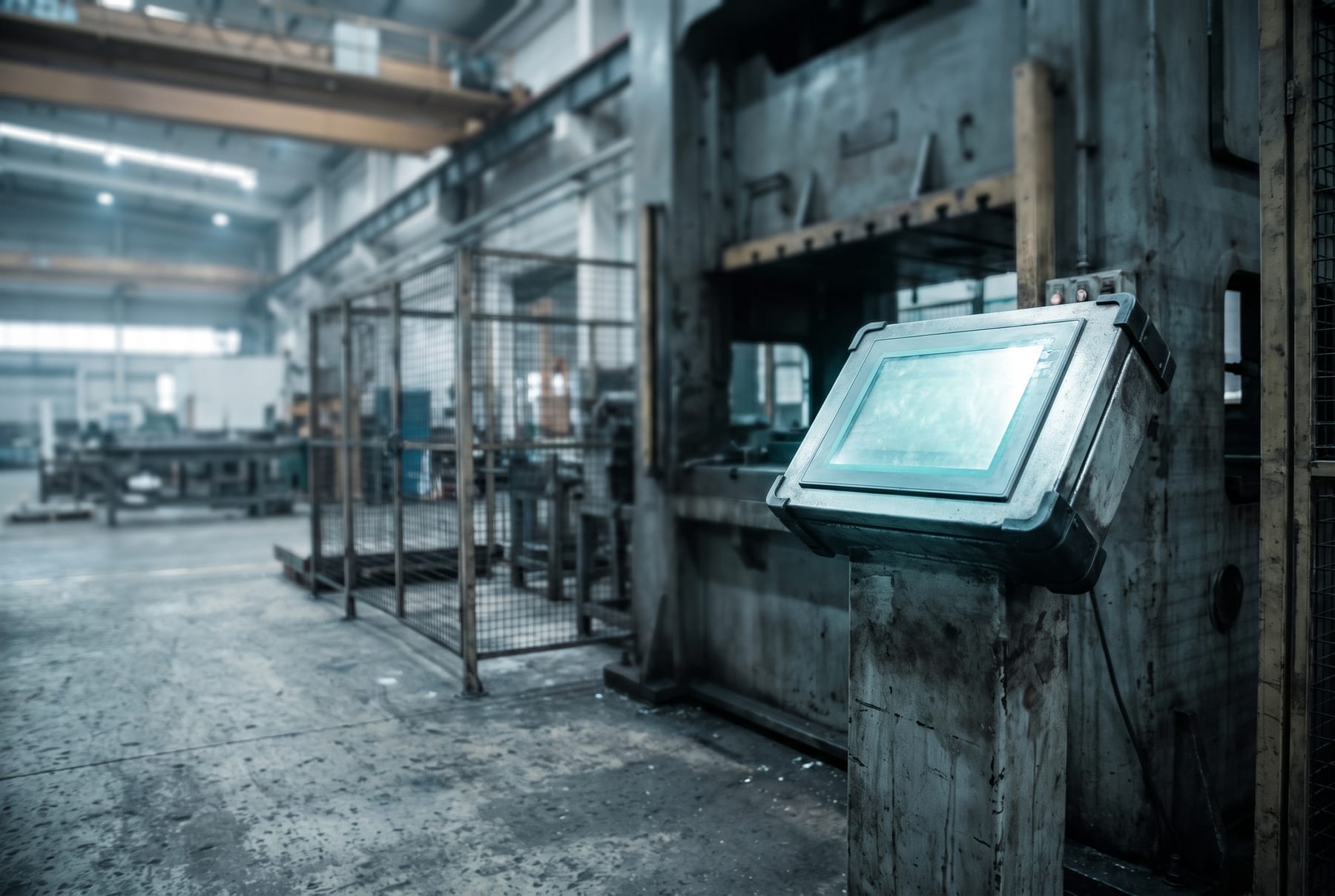
What did that coil become?
Lot, order, press, die, production, quality and dispatch are one chain. Ask it forwards from a coil or backwards from a shipment. More on material traceability.
- Coil receivedCOIL-2291
Lot code, quantity, stock date, expiry
Material inventory
Material inventory
Lot code, quantity, stock date, expiry
- Lot allocatedLOT-8841
Oldest qualifying lot, selected first
Lot usage transaction
Lot usage transaction
Oldest qualifying lot, selected first
- Work orderWO-SFG0151-08
Target quantity, scheduled window
Work order
Work order
Target quantity, scheduled window
- Press and dieMC004 · TL0051
Strokes, rate, every stop
Run order
Run order
Strokes, rate, every stop
- Production16,394 parts
Counted at the crank
Run order metrics
Run order metrics
Counted at the crank
- Quality2 checks, 0 fail
Pass, partial, fail per parameter
Quality check session
Quality check session
Pass, partial, fail per parameter
- DispatchedDSP-0472
Quantity out, batch, audit row
Dispatch history
Dispatch history
Quantity out, batch, audit row
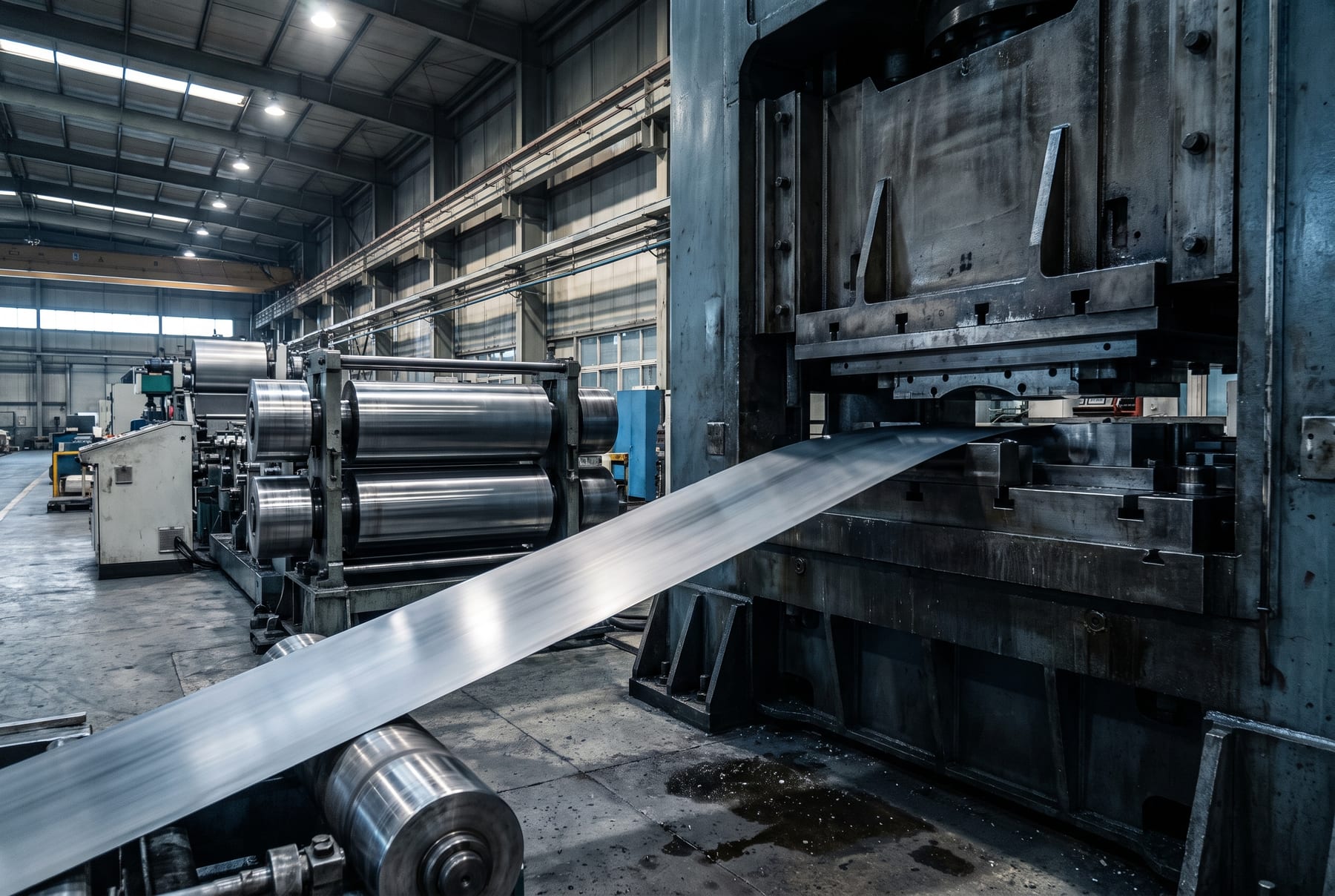
What a run costs, before the coil is loaded.
The tool decides how many strokes it takes. The product decides which press may run it. The bill of materials decides how much strip it eats, through a usage factor, a scrap factor and an in process rejection percentage held per product and material. More on tool, product and BOM management.
Two presses free, one die.
One timeline for every resource in the plant, presses and dies together, with production and maintenance on the same grid. Conflicts between resources are caught while you are still planning rather than on the morning of the run. More on production scheduling.
A calendar never told anyone to pull a die.
A die has a meter. Every stroke counts against its life, so it falls due on work done rather than on a date. A press has no such meter, so its jobs are raised and booked. Both run the same lifecycle and land on the same board. More on machine and tool maintenance.
Three days from a bare press to a live record.
The interface is the encoder and the relays already on the machine, which is why the make and the vintage matter far less than you would expect. Condition sensors for pressure, energy, air and temperature join the same PLC. More on IIOT for stamping presses.
Every line on this drawing carries data out of the press. One of them runs the other way.
Rules the press cannot ignore.
Overproduction, misfeed, a failed in process check, a changeover running past its window. The press unlocks when production should run and locks when it should not, and every command is recorded with its outcome. More on the machine interlock.
Put one press on Crimson.
We instrument one press, run it for a month, and show you the shift record against what you thought was happening.
Book a walkthrough